



The ability to communicate effectively in English is an invaluable skill in today’s globalised world. Whether you’re a student looking to excel academically, a professional aiming to advance in your career, or simply someone eager to enhance your language proficiency, the choice of how to improve your English skills is a significant one. This post delves into the debate surrounding two popular options: English tuition and self-study.
Understanding English Tuition
English tuition in Singapore refers to the provision of supplementary education designed to enhance a student’s proficiency in the English language. While English is one of the official languages in Singapore, a high level of proficiency is essential for academic success, communication, and future career prospects.
English tuition can be offered by various educational institutions and private tutors, catering to students of all ages, from primary school to post-secondary education.
Benefits of Formal Instruction
Here are some of the advantages of formal instruction in English:
a. Academic Excellence: English tuition helps students excel in their studies by providing additional support in areas such as reading, writing, and comprehension. It can lead to higher grades and academic achievements.
b. Improved Communication: Proficiency in English is crucial for effective communication. Tuition can enhance a student’s ability to express ideas clearly and confidently.
c. Global Competence: English is a global language, and strong language skills open up international opportunities. It’s often a requirement for higher education and job prospects abroad.
d. Enhanced Critical Thinking: English tuition encourages critical thinking and analytical skills through the analysis of literature, essays, and discussions.
e. Exam Preparation: Many tuition programs focus on exam-specific content and strategies, preparing students for standardised tests and assessments.
f. Personalised Learning: Tutors can tailor instruction to address the specific needs and weaknesses of individual students.
Types of English Tuition Programs
Various types of English tuition programs are available to cater to diverse learning needs:
a. Private Tuition: Many students opt for private tutors who provide one-on-one instruction. This personalised approach allows for focused attention on the student’s needs.
b. Tuition Centers: Tuition centres offer group classes, often with structured curricula and experienced instructors. They are popular due to affordability and structured learning programs.
c. Online Tuition: With the advent of technology, online English tuition is gaining popularity. It offers flexibility and convenience, enabling students to access resources from anywhere.
d. Specialised Courses: Some tuition programs are designed for specific purposes, such as exam preparation (e.g., PSLE, O-levels, A-levels) or business English.
e. Intensive Language Programs: These programs provide immersive experiences for students looking to enhance their language skills quickly.
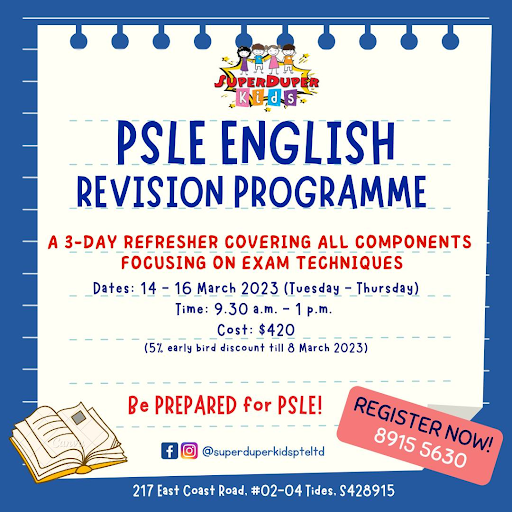
Super Duper Kids offers a comprehensive range of intensive English Language Programs tailored specifically for kids. These programs are thoughtfully designed to provide a deep dive into the English language, focusing on all aspects of language development, including reading, writing, speaking, and listening.
The Advantages of Self-Study
Self-study is an increasingly popular and effective approach to learning, even for children.
Self-Study as a Flexible Option
Self-study offers several advantages for kids, including:
a. Personalised Learning: Children can tailor their study schedules and content to match their own pace and interests. This flexibility allows them to explore subjects they are passionate about and excel in areas where they need improvement.
b. Freedom to Explore: Self-study encourages curiosity and a love of learning. Kids can delve into topics outside their formal curriculum, fostering a broader understanding of the world.
c. Self-Paced Learning: Children can learn at their own speed, taking extra time on challenging subjects and moving quickly through familiar material. This approach reduces the pressure and stress often associated with conventional education.
d. Life Skills: Self-study cultivates essential life skills like time management, organisation, and responsibility. Kids learn to set goals, manage their time, and plan their learning effectively.
e. Self-Discipline: Self-study instils discipline as kids learn to manage their time effectively. They develop the ability to adhere to a study routine, which is valuable for both education and life in general.
f. Intrinsic Motivation: Kids often discover a sense of purpose and motivation when they’re studying subjects they are genuinely interested in. This intrinsic motivation can drive them to excel and explore their passions.
g. Ownership of Learning: Self-study encourages kids to take ownership of their education. They become responsible for their progress, empowering them to make choices about what, when, and how they learn.
Online Resources and Tools
The digital landscape offers abundant online resources and tools to enrich the educational journey:
a. Vast Educational Websites: The internet offers a wealth of educational resources, from Khan Academy and Coursera to Duolingo and TED-Ed. These platforms provide engaging and interactive learning opportunities.
b. Digital Libraries: E-books, audiobooks, and online libraries grant children access to an extensive range of reading materials, fostering their love for literature and expanding their knowledge.
c. Educational Apps: There is an abundance of educational apps designed for various subjects and age groups. These apps often make learning more enjoyable and accessible.
d. Video Tutorials: Platforms like YouTube provide access to countless educational videos and tutorials. Kids can learn from experts and enthusiasts on a wide array of subjects.
Finding the Right Balance

Balancing English tuition and self-study is crucial to ensuring a well-rounded and effective approach to education.
Combining English Tuition and Self-Study
Complementary Learning: English tuition and self-study can complement each other. Tuition provides structured guidance, while self-study fosters curiosity and personal growth. This combination leverages the best of both worlds.
- Customised Support: Students can receive personalised attention and targeted instruction through tuition while also exploring their passions and self-paced learning through self-study.
- Effective Time Management: A hybrid approach encourages time management skills. Students learn to allocate their time between guided lessons and self-directed exploration, fostering a sense of responsibility.
- Flexible Adaptation: The balance can be adjusted as per the student’s changing needs. If a student struggles in a specific area, they can allocate more time for tuition, while strong subjects can be explored through self-study.
Tailoring an Approach to Individual Needs
- Assessment and Goal Setting: It’s important to assess a student’s strengths, weaknesses, and personal goals. This assessment can guide the balance between tuition and self-study.
- Regular Check-ins: Parents, teachers, or mentors can periodically check a student’s progress to ensure they are on track and to make necessary adjustments.
- Interest-Driven Learning: Encourage students to pursue their interests through self-study. If they are passionate about a topic, they are more likely to excel.
- Building Resilience: The hybrid approach fosters resilience by teaching students to adapt and overcome challenges. It equips them with essential skills for lifelong learning.
Factors to Consider When Choosing Between English Tuition and Self-Study
When faced with the decision of whether to opt for English tuition or embrace self-study, several crucial factors should influence your choice.
a. Student’s Learning Style: Assess the student’s preferred learning style. Some students thrive in structured environments, while others excel when they have more independence.
b. Academic Goals: Consider the student’s academic goals. If they are preparing for a standardised exam, English tuition might be beneficial. However, if they have specific interests and passion projects, self-study could be more fitting.
c. Strengths and Weaknesses: Identify the student’s strengths and weaknesses in the subject. Tuition can provide targeted support for areas of difficulty, while self-study can enhance strengths.
d. Time Availability: Evaluate the time available for learning. If a student has a busy schedule, tuition may provide more structure, while self-study allows flexibility.
e. Resources and Support: Consider the availability of resources and support. Tuition often provides access to qualified instructors and materials, while self-study relies on the student’s ability to find resources.
Real-World Considerations: Cost, Time, and Goals
When contemplating English tuition for kids, it’s essential to consider real-world factors such as cost, time commitments, and goals:
- Cost: English tuition can be expensive, especially if it involves private tutors or specialised programs. Self-study is often more cost-effective, utilising free or low-cost online resources.
- Time Commitment: English tuition may require a fixed schedule, which could be challenging for students with many extracurricular activities. Self-study is more flexible in terms of time management.
- Goals and Aspirations: Consider the student’s future goals. If they have specific career aspirations that require English proficiency, English tuition might be necessary. If they want to explore their interests, self-study can be beneficial.
- Balance: Some students find a balance between tuition and self-study to be the most effective approach. This combination allows students to benefit from structured guidance while pursuing personal interests. Balance is crucial in the context of kids learning English. Striking the right equilibrium between structured English tuition and self-study is essential for their holistic development.
Empower Your Child’s Future with Super Duper Kids
As parents, it’s important to understand that the landscape of English language learning is constantly evolving. There is an abundance of resources and tools available for your child’s educational journey. Embrace this dynamic environment with a sense of enthusiasm, knowing that your child has the freedom to explore and tailor their learning experience to align with their unique aspirations.
If you’re a parent looking for top-tier English tuition for your child, we strongly suggest considering enrollment in Super Duper Kids. This institution has earned a stellar reputation for its unwavering dedication to providing outstanding English language education.
By teaming up with the experts at “Super Duper Kids,” who are wholeheartedly committed to nurturing young minds, you’ll be giving your child the most solid foundation possible for achieving academic excellence and personal development. Contact us now to know more about different programs we offer.
